← BlogWhat Programming Language Actually Gets You Hired in 2026
Career7/10/2026By

What Programming Language Actually Gets You Hired in 2026

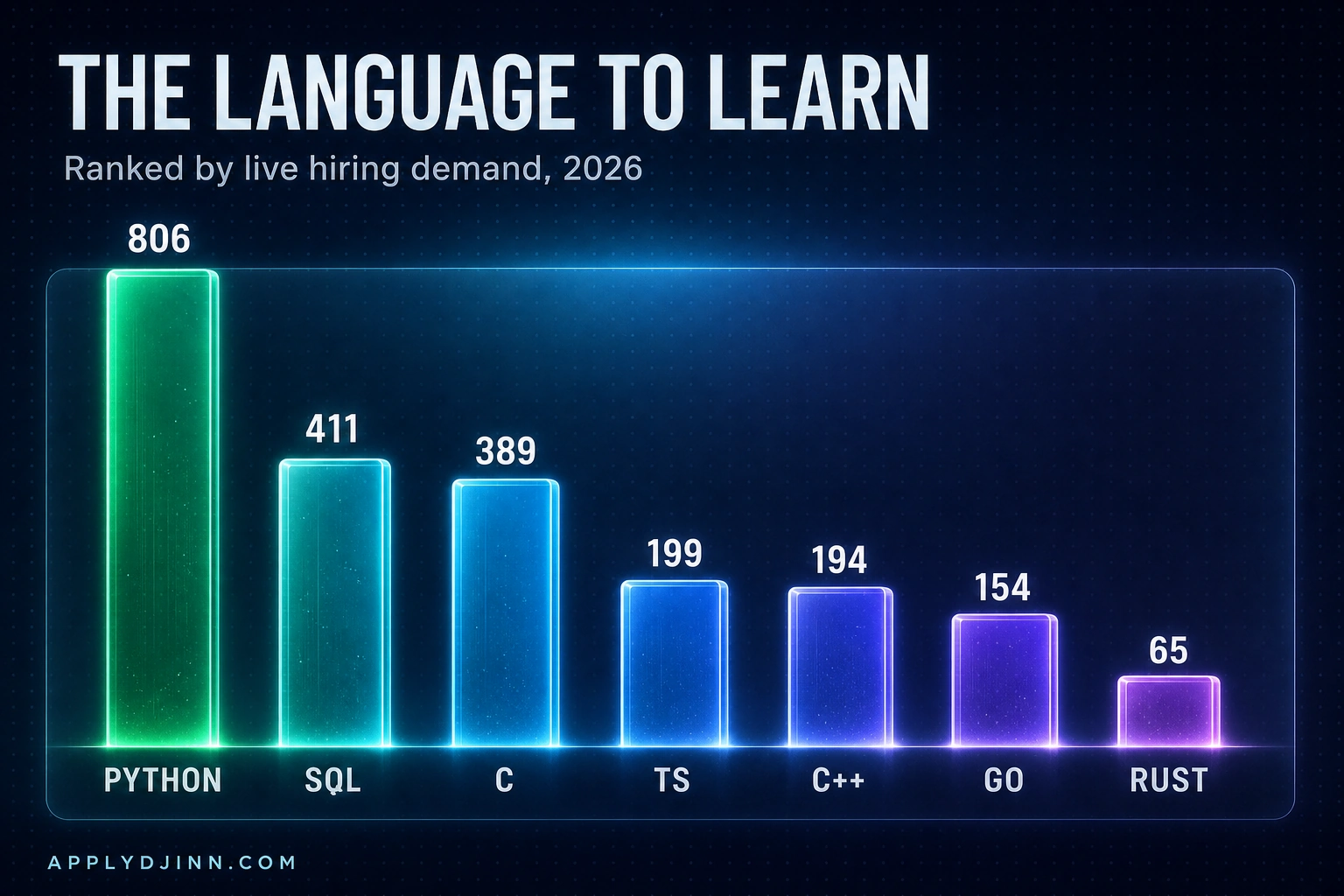
Python 806, C 389, TypeScript 199, C++ 194, Go 154, Rust 65. We ranked languages by live vacancy demand — and what the ranking does not tell you.

Every student and career-switcher asks the same question: which language should I learn? We can answer it from live demand instead of opinion — here is how the languages we track rank by the number of active vacancies that mention them.


The ranking, by live vacancy mentions


  • Python — 806. The default. AI, data, backend, scripting, and the glue between all of them.
  • SQL — 411. Nobody brags about it, yet it out-mentions React and Kubernetes. The most universal hard skill after Python (we gave it its own piece).
  • C — 389. Systems, embedded, and the silicon wave — bigger than most people expect.
  • TypeScript — 199. The frontend default, and increasingly backend too (see our frontend piece).
  • C++ — 194. Performance, kernels, inference engines — having a genuine renaissance.
  • Go — 154. Cloud infrastructure and services, the language of the platform layer.
  • Rust — 65. Smaller count, but concentrated in high-bar, well-paid systems roles.

  • What the ranking does NOT mean


  • More mentions is not "better career." Python''s ubiquity means the most competition too. A high count is demand AND supply.
  • Rust at 65 is not "small." It is concentrated in roles with few qualified applicants. Scarcity of talent, not scarcity of jobs, is what sets your leverage.
  • Counts measure breadth, not pay. The systems languages appear less often but price higher, because the depth they require cannot be crammed.

  • How to actually choose


    Choose by the work you want; the language follows:


  • AI and data → Python
  • Frontend → TypeScript
  • Systems, performance, embedded → C, C++, or Rust
  • Cloud infrastructure and services → Go
  • Enterprise backend → Java

  • Then commit. Depth in one language beats a shallow spread across five — employers hire "a strong Go engineer," not "someone who lists eight languages."


    The safe bet vs. the asymmetric bet


  • Safe bet: Python + SQL. Employable almost anywhere, for the foreseeable future — but crowded, so you compete on everything else.
  • Asymmetric bet: a systems language. Rust, C++, or Go put you in smaller pools with durable demand. The ROI on genuine depth is higher precisely because it is hard to fake.

  • A strong move for most people: pair a high-level language (Python or TypeScript) with one systems language (Go, Rust, or C++). Contrast, not redundancy.


    The meta-skill nobody lists


    The language is the smallest part of the job. What actually compounds: reading large codebases, debugging under pressure, systems thinking, and shipping things that survive real users. Every one of those transfers across languages. Pick a language to start with, not to marry.


    Counts are live vacancy mentions across 3,383 active postings and 102 companies tracked by ApplyDjin, July 2026.

    #Python#Go#Rust#Languages#Career